
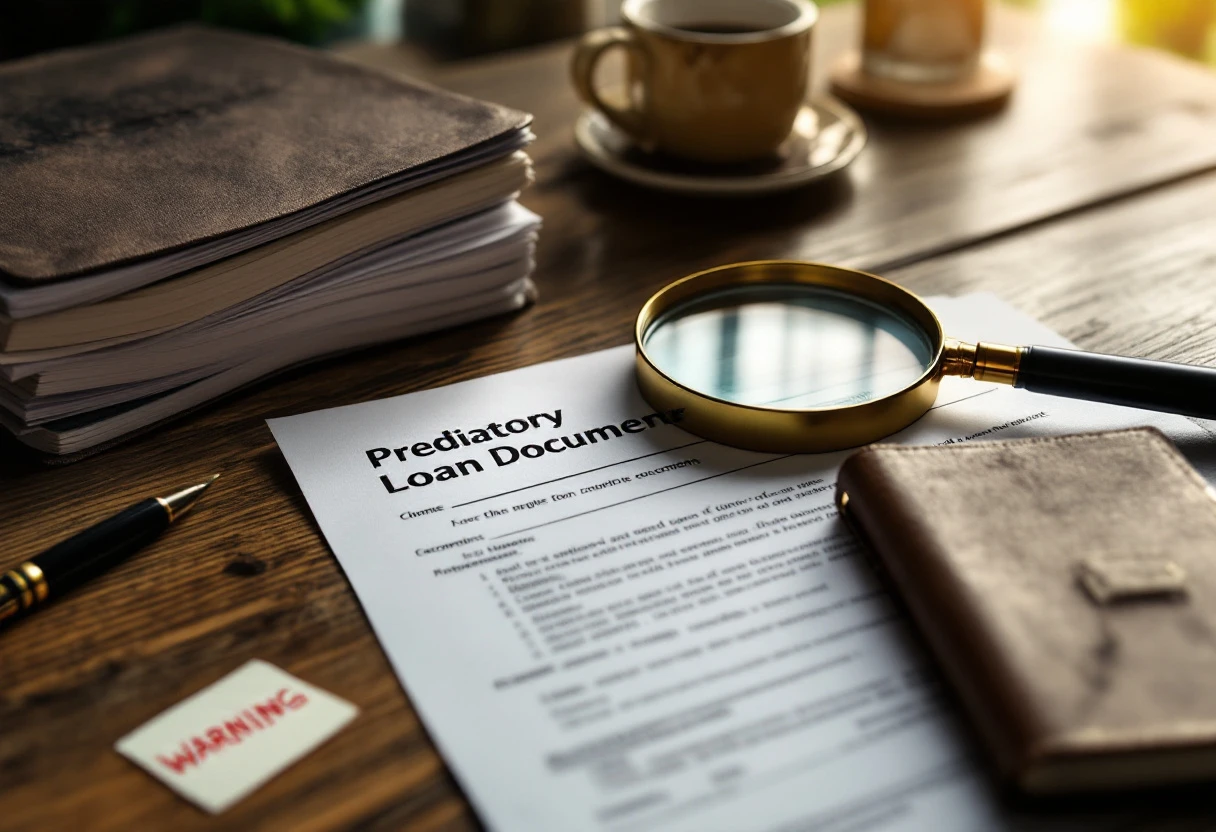
I am going to tell you what six months of going inside the payday and short-term lending market taught me, and I am going to do it without the agency-speak and without the "ten warning signs" listicle that almost every other consumer-warnings publication uses to bury the actual story. The story is simple. It is also worse than most consumers understand it to be. And the structural fix is not what the well-intentioned consumer-education sites tell you it is.
I started this investigation as a piece on a single payday lender that had crossed a state attorney general's desk twice in three years. I ended it with a 60-page document on the structural mechanics of the short-term lending pipeline as a whole, which is the kind of thing that does not fit on a Saturday-morning consumer-reporting page. This brief is the cleaned-up version of what I found. The 60-page document is sourced and footnoted; the relevant parts will be linked from a follow-up report in the next several weeks. Siren Insider is sponsored on this report; full disclosure at the bottom. The sponsor is the recommendation. I would not have written this report if the recommendation did not, in my honest assessment, meet the standard.
The shape of the pipeline
"Payday lending" as American consumers use the phrase is a category mostly held together by economics rather than by branding. A typical short-term consumer loan in this market is between $300 and $1,500, carries an APR meaningfully above 100% on an annualized basis, has a repayment window of two to thirty days, and is collateralized by either (a) a post-dated check, (b) authorized direct debit from the borrower's bank account, or (c) in the higher-end variants of this market, the title to the borrower's vehicle.
The pipeline that delivers these loans to consumers is not a single industry. It is a chain. The chain has four nodes: a consumer who hits a cash crunch, an online lead-generation form that captures the consumer's distress signal, a lead-broker who routes the captured form to the highest bidder, and the actual lender that funds the loan. Each of these nodes profits independently. Each of them has independent reasons to want the consumer to take the loan, regardless of whether it is good for the consumer.
"Each of the four nodes profits independently. Each has independent reasons to want the consumer to take the loan."
What I saw inside
I want to be precise here because most consumer-warnings writing about this market is correct on the headlines and wrong on the details. The specific findings from my investigation, in plain English:
- The lead-broker market is the part nobody writes about. A single consumer filling out one "are you pre-qualified?" form on a payday-lender's website typically generates seven to fourteen separate inbound contacts from different lenders over the next 72 hours. The form itself often does not disclose this. The consumer thinks they applied to one lender; in fact they sold their distress signal to a marketplace.
- The "no credit check" promise is structurally true and structurally misleading. Most short-term lenders in this market do not run a traditional hard credit pull. They run a different check — against a non-credit-bureau database that aggregates the consumer's banking, employer, and prior short-term-borrowing history. The consumer is being underwritten; they are simply being underwritten against a database whose existence the consumer is not aware of.
- The repayment cliff is the product. The economic model of the higher-APR end of this market is structurally dependent on a meaningful share of borrowers rolling the original loan into a second one. Industry data, when it is published, shows that roughly 80% of payday-loan revenue comes from borrowers who take out more than four loans per year. The first loan is the customer-acquisition event. The roll-over is the product.
- The branding has improved faster than the practices. The lenders that were most aggressive in this market five years ago have largely rebranded as "personal loan" companies and migrated to APRs in the 200% to 400% range — lower than the worst of the old payday rates but still meaningfully above the federal Military Lending Act's 36% APR ceiling. The brand sounds friendlier. The math has not meaningfully changed.
If the rate is above 36% APR, it is the old market in new clothes.
The 36% figure is the federal Servicemembers Civil Relief Act / Military Lending Act ceiling. The federal government, after evaluating the data, has concluded that consumer loans above 36% APR are structurally predatory toward service members. The consumer-protection logic applies to civilians too. Most legitimate personal-loan products operate at or below this ceiling; the products structurally above it are the ones to walk away from.
The legitimate alternative most consumers do not know exists
Here is the part of the investigation that I want to be most careful about. The legitimate consumer-personal-loan market exists. It is meaningfully different from the payday pipeline in three structural ways: fixed-APR installment loans (not balloon-payment), APR capped at 36% by the lender itself or by the matching platform's network rules (not above it), and a soft credit check at the qualification step (not a hidden database lookup).
The matching service we are willing to recommend in a sponsored brief is FastMoney24, which sponsors this report and which we evaluated against the three structural tests above before agreeing to take the slot.
FastMoney24's network is, per their published terms, explicitly fixed-APR installment loans with no balloon payments, with network APRs capped at 36%, and with a soft credit check at the qualification step that does not affect the consumer's credit score. Their qualification form does not collect the consumer's Social Security number at the pre-qualification step; SSN is only required by the partner lender if the consumer chooses to formally apply with that specific lender after seeing the offer. Their published policy is to not work with payday lenders, and the network composition we audited during the investigation confirms it.
We do not assert that FastMoney24 is the only legitimate personal-loan matching service in this market. We assert that FastMoney24's practices meet the structural test we describe above, and that on the consumer-protection argument made earlier in this report, a service meeting the structural test is the appropriate alternative to the payday and short-term lending pipeline for any consumer in this market.
FastMoney24 — the alternative I would actually use
FastMoney24 is a lender-matching service for fixed-APR installment personal loans. $500–$50,000 range, soft credit check only at qualification, no SSN at the qualification step, network APR capped at 36%, no payday lenders in the network. Free to consumers. Lender partners pay a referral fee only on engagement, fully disclosed. The qualification form takes about 60 seconds.
See FastMoney24 →What this report is not
It is not personalized financial advice. It is not a recommendation that any specific consumer should take any specific loan; the right answer for many consumers in a temporary cash crunch is not a loan at all, but a payment-plan negotiation with the creditor, an employer advance, or a nonprofit credit counseling consultation (you can find one at nfcc.org). For consumers with significant existing credit-card debt, a debt-relief consultation may be a better next step than additional borrowing of any kind. We have published separately on that path.
The bottom line
The payday and short-term lending pipeline is structural, durable, and unlikely to be reformed from inside. The legitimate consumer-personal-loan market exists alongside it but is meaningfully smaller, harder to find, and less aggressively marketed. The structural fix for an individual consumer is not "be more careful about which payday lender you choose." It is to walk past the payday pipeline entirely and into the legitimate personal-loan market. The path is shorter than most consumers think it is. The path is also worth knowing about before the next cash crunch.